
Science of Urinalysis - What is Diabetic Nephropathy?
Download PDF
Diabetic nephropathy (DN), a common complication of type 1 and type 2 diabetes, occurs when blood vessels and other cells in the kidney are damaged due to sustained hyperglycemia. If treated unsuccessfully, DN may progress to end-stage renal disease (ESRD). It is the leading cause of chronic kidney disease and the second leading cause of death in patients with diabetes.
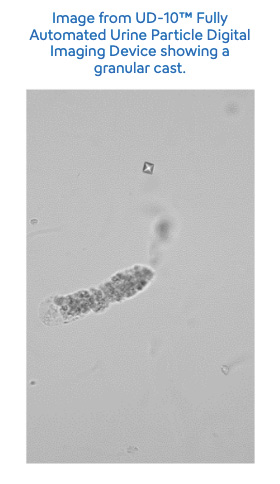
Damage to the kidney in DN causes protein to leak from the glomeruli and the glomerular filtration rate (GFR) to decline. As kidney disease progresses, urine flow through the nephrons slows, and the leaked protein can collect in the tubules and form casts. Granular casts are created when cellular debris becomes trapped in the protein cast. The presence of granular casts in DN patients indicates disease progression.
There are five stages of DN which are based on the level of kidney damage:
- Stage I: glomerular basement membrane thickening
- Stage II: mesangial expansion
- Stage III: nodular glomerulosclerosis
- Stage IV: diffuse glomerulosclerosis
- Stage V: end-stage renal disease
Resources:
Rout P, Jialal I. Diabetic Nephropathy. [Updated 2025 Jan 9]. In: StatPearls [Internet].
Treasure Island (FL): StatPearls Publishing; 2025 Jan-.
Available from: https://www.ncbi.nlm.nih.gov/books/NBK534200/; accessed 12/3/2025
https://www.hopkinsmedicine.org/health/conditions-and-diseases/diabetes/diabetic- nephropathy-kidney-disease; accessed 12/3/2025
Keep reading: Download PDF